

With spooky season in full swing, candy aisles everywhere are looking like a sweet graveyard of empty shelves. Chocolate bars are flying off faster than ghosts at sunrise — that little square of happiness that can lift your mood, melt away stress, or sweeten any scary movie marathon.
But lurking behind those Halloween treats is a fright that’s very real: the price of cocoa — the soul of chocolate — has gone through the roof.
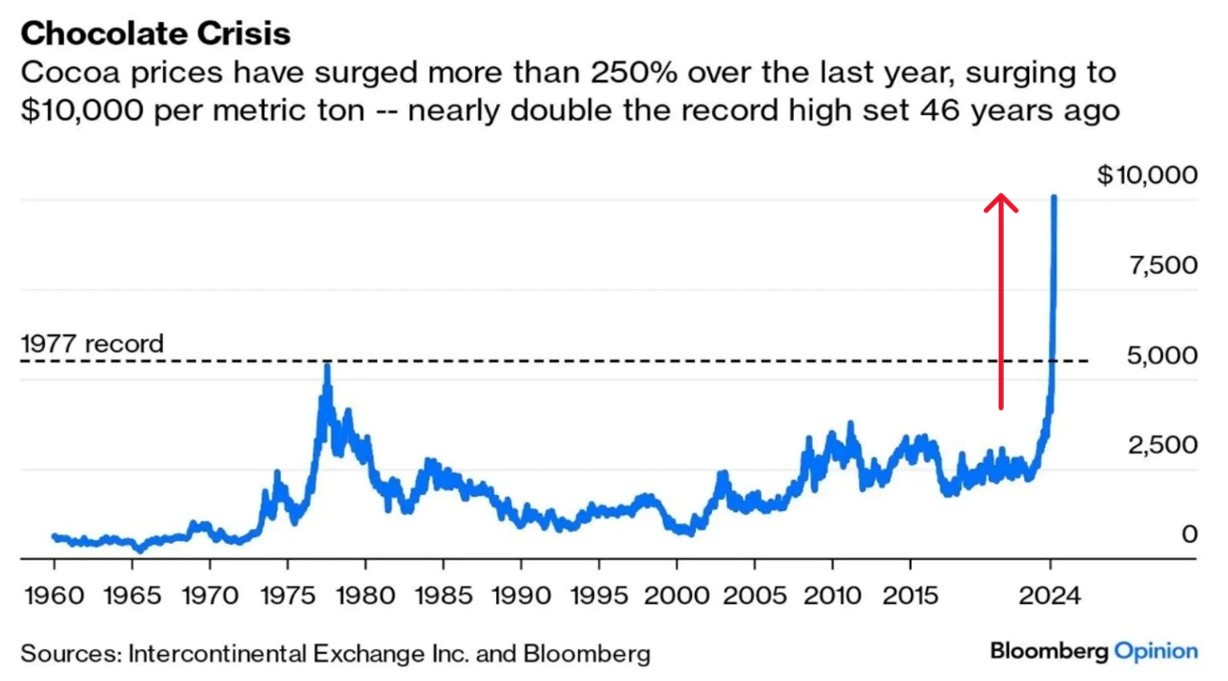
In early 2025, cocoa prices soared to record highs above US $13,000 per metric ton — more than triple the average from just a few years ago. Since then, prices have eased as the strong 2025 crop is harvested, but they still sit around US $6,000 per metric ton, roughly 20% higher than the previous annual record.
That’s enough to give even Willy Wonka a fright. As a result, chocolate makers are scrambling to keep costs down, and consumers are starting to notice: bars are getting smaller, prices are creeping up, and some recipes are even changing.
________________________________________
👻 What’s Causing the Cocoa Curse?
Cocoa is a dramatic crop — a true diva of the tropics. It only thrives in warm, humid climates near the equator, which is why about 70% of the world’s supply comes from Ghana and Ivory Coast.
But in recent years, Mother Nature’s been anything but sweet. These regions have been hit with wild weather swings — too much rain one year, too little the next — plus crop diseases and old, tired trees that just can’t produce like they used to. Add in pricier fertilizers (thanks to global supply chain chaos from the pandemic and the war in Ukraine), and you’ve got the perfect storm for a cocoa catastrophe.
With supply shrinking, chocolate companies — from Mars to Hershey — are facing a scary choice:
💀 Raise prices,
🎃 Shrink their bars, or
🧪 Reinvent chocolate altogether.
________________________________________
🧪 Enter: Lab-Grown Chocolate — Science Meets Sweet Tooth
If this all sounds like a horror story for chocolate lovers, there might be a mad-scientist twist to the tale.
A new wave of food-tech wizards are brewing up something extraordinary in the lab: real cocoa grown from cells, not trees.
Take California Cultured, a startup growing cocoa cells in shiny steel bioreactors — basically, giant tanks that act like supercharged greenhouses. Scientists extract cells from a single cocoa bean, feed them nutrients, and let them grow in a perfectly controlled environment — no pests, no droughts, no deforestation.
The result? Cocoa that’s chemically identical to the real thing — just made with science instead of soil. Think of it as chocolate with a PhD.
It’s the same concept as lab-grown meat or milk alternatives, but this time, the experiment is all about saving dessert.
________________________________________
🌱 The Promise of Sustainable Sweetness
This lab-grown approach could be a real treat for the planet. Traditional cocoa farming often means cutting down tropical forests to make room for new plantations, which adds to carbon emissions and hurts biodiversity.
Lab-grown cocoa, on the other hand, could take the pressure off fragile ecosystems — and make chocolate production more resilient to climate change. For big chocolate brands juggling sky-high costs and sustainability goals, that’s a pretty irresistible combo.
If all goes well, the next generation of chocolate bars might come with a smaller footprint — but the same delicious melt-in-your-mouth magic.
________________________________________
🍪 Diversifying Beyond Chocolate — The Snack Empire Strikes Back
Of course, chocolate giants aren’t putting all their beans in one basket. Many are protecting themselves from cocoa’s wild price swings by branching out into other snacks — the kind that don’t rely so heavily on cocoa.
Mondelez International, for example, might be famous for Cadbury, Milka, and Toblerone, but a huge chunk of its profits comes from its snack lineup — Oreos, Ritz, and belVita biscuits. That mix gives Mondelez a sturdy safety net when cocoa prices get spooky.
Nestlé has been doing something similar, diving deeper into coffee, nutrition, and even pet care — all far from the reach of cocoa’s curse.
And Hershey, once all about bars, has gone full snack mode. Its recent purchases — Pirate’s Booty, SkinnyPop, and Dot’s Pretzels — have turned it into a salty-sweet empire. So even if chocolate costs soar, there’s still popcorn and pretzels to munch on.
This shift brings some tasty advantages:
🍫 Less dependency on cocoa.
🥨 More flexibility for changing tastes.
💪 Stronger brands that survive price scares.
In short, today’s chocolate makers are turning into snack leaders, not just candy companies — proving you don’t need a cocoa bean to make a killing in the snack aisle.
________________________________________
🕸️ What It Means for Chocolate Lovers
Don’t panic — your favorite chocolate bar isn’t vanishing anytime soon. But it is likely to cost more and come in slightly smaller pieces (hello again, shrinkflation 👀).
The upside? All this chaos is fueling some seriously cool innovation — from lab-grown cocoa to sustainable farming and creative new recipes. It’s forcing chocolate companies to think smarter, not just sweeter.
So when you’re digging through your Halloween candy haul this year, pause for a second before tearing into that bar. It’s more than just a bite of happiness — it’s a tiny reminder of how global agriculture, technology, and climate all collide in something as simple as a treat.
And who knows? A few years from now, the chocolate you’re enjoying might not have grown on a farm at all — it might have started life in a high-tech lab, conjured by scientists instead of farmers.
Until then, savor every bite… because this year, chocolate really is a trick and a treat. 🍫🎃
BONUS READING: A Wealth of Common Sense – Ben Carlson: Staying the Course Worked (Again)
As the Price of Chocolate Soars
Chocolate Set to Get More Expensive
Cocoa Prices – Sustainability By Numbers

