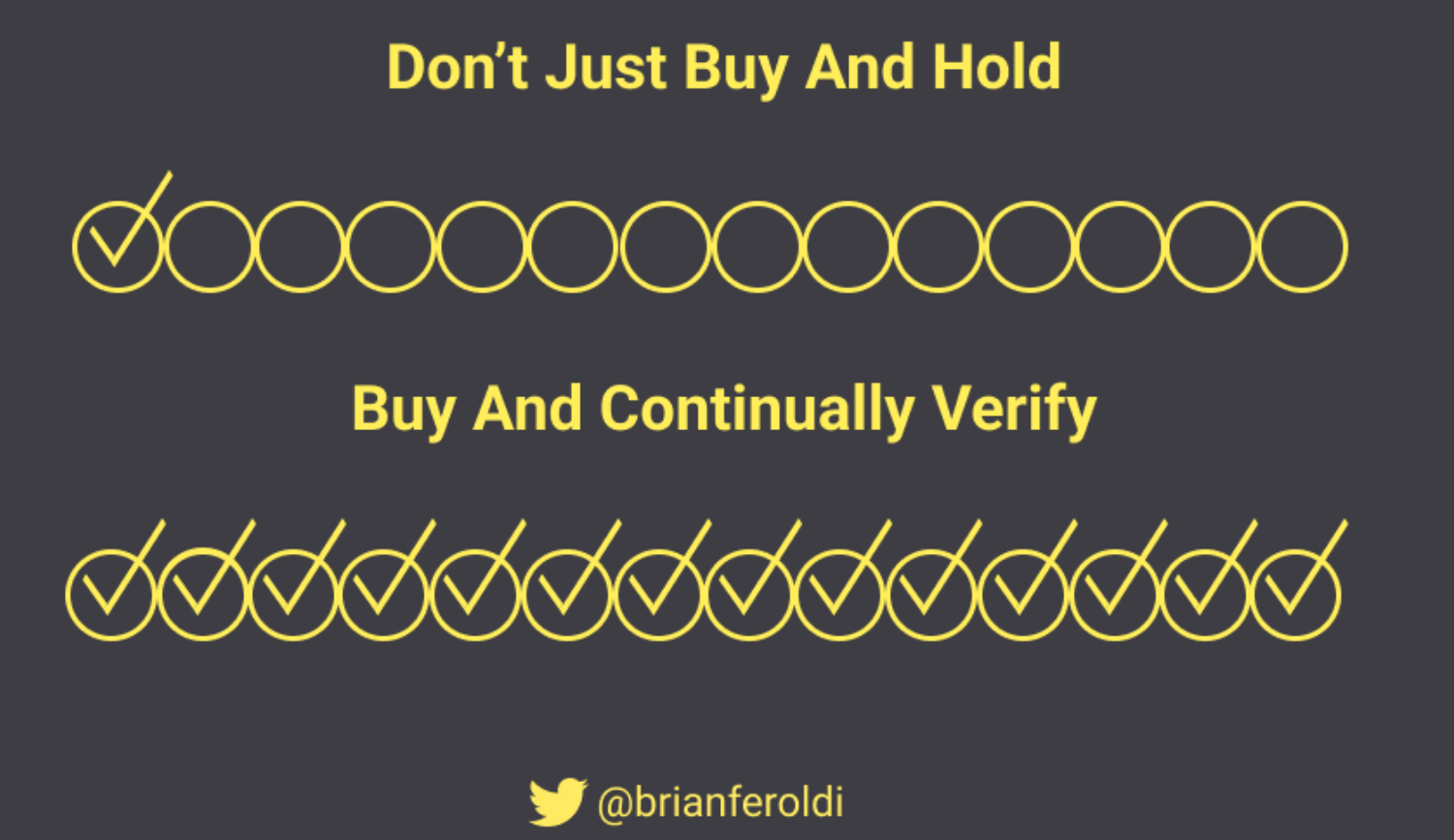
This is undoubtedly our busiest time of the year.  It is a combination of tax season and heightened due diligence for investment products that are in our client portfolios and new ideas that deserve consideration for inclusion. This is one of our most important tasks and is beautifully illustrated by Brian Feroldi’s simple chart:


Coincidentally, this is occurring while an old trend re-emerges: market volatility.

Volatility occurs when a market, or stock or fund shows unpredictable and sometimes sharp price movements.  Note that there is always volatility; but we tend to pay attention when it is negative and extreme.  In a lighthearted poll of TFP advisors, none of us recall a client call regarding volatility when the market is up 8.45% year to date.[1]

The fact is that we get comfortable in periods of low volatility and mistakenly believe that it will continue indefinitely. Further compounding the issue, we feel the pain of loss far greater than the joy of success and it can lead to poor investment decisions. Nobel laureate, Daniel Kahneman, the father of behavioral finance, passed away last month leaving behind a valuable lesson:

“Take two hypothetical investment situations. One, your million-dollar portfolio to start the year ends it at $1,250,000, up 25%. Two, your million-dollar portfolio initially skyrockets to $1,500,000 by midyear for a 50% gain! But then negativity strikes and your portfolio ends the year at only $1,250,000—the exact same place as the first case.”[2]

Every one of us would pick the first scenario instead of the second illustrating steady growth. But in reality, the portfolios’ performance is the same over the course of the year.

Until recently, volatility in 2024 has been unusually low and it serves us well to be reminded of such.  Carson Investment Research really puts things into perspective:

The best strategy in volatile times is to own a properly diversified portfolio which will mitigate the impact of the sharp swings and increase the odds of meeting your long-term objectives.

This brings me to two meetings we attended this week. Both were with trusted investment partners.  Both had well-researched, well-documented and properly tested theses on portfolio construction.  Both had rationally constructed and pleasing performance estimates.

This is where it gets interesting: they held strongly opposing views.  On the surface there are four options: choose option 1, option 2, both, or neither and pursue a different direction.

If maximizing returns is the sole goal, one should choose either option 1 or option 2 (in reality, you should put all of your money into one single stock). If this approach matches your needs, we suspect that you are not going to be happy at Thomson Financial Partners.

However, one of the forgotten truths of investing is that there can be more than one right answer.  In other words, both option 1 and option 2 can be valid.

Therefore, if the goal is to make sure that you have enough money to live your best life, the rational option is to choose both option 1 and option 2.  If they are both correct, wonderful.  However, by diversifying, we accept that one of the options will likely outperform the other, and we prudently manage the risk of unforeseen events affecting one option negatively…all while still achieving your individual goals.

One of our investment partners put it nicely in the summary of their quarterly report released this week:

We continue to balance the risks, managing exposure to sharp edges by constructing portfolios we believe to be resilient.[3]

Take care,
Eric, Rob, Chris, & Shiv

Kerry, Bev, Stacy, Sara, Julie, Patti & TJ

THOMSON FINANCIAL PARTNERS


[1] S&P500 as at April 12th, 10:47 am. when written by the author.