
Our team has had a busy few weeks attending due diligence meetings, presentations and events, not just on the investments currently in your portfolio, but also on those you don’t own.
We’ve been in direct contact with portfolio managers and subject-matter specialists we rely on to deliver strong results. These conversations allow us to ask the tough questions, confirm your investments are still aligned with your goals, and explore any new opportunities that might serve you better. Plus, it’s nice to make sure they’re still as sharp as their suits.
Here are some of the key takeaways from the last few weeks:
Markets vs. Media: A Tale of Two Stories
 If you’ve tuned into the news lately (or accidentally left it on while waiting for the hockey playoff game to start), financial news seems to be creeping into the headlines. You’ve probably noticed the recurring theme: uncertainty. The bond market is signaling recession, while the stock market seems to be on a caffeine high, with 75% of firms beating earnings expectations in Q1. (Andrew Clee, VP Product at Fidelity, May 2025)
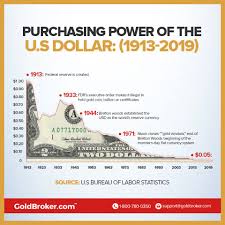
The Shifting Power of the U.S. Dollar
One topic that came up repeatedly: the slow erosion of U.S. dollar dominance. Historically, uncertainty (there it is again) sends investors racing to U.S. cash. We are seeing less of this than expected, with portfolio managers pivoting toward international holdings. One reason we like dealing with global equity funds is that they give managers the flexibility to shift exposure away from the U.S. when appropriate, and right now, many are seeing better value abroad. Many firms outside the U.S. offer similar capabilities as U.S. firms, but their stock prices are more attractive (cheaper). An example of this is Safran, a French aircraft engine producer. This firm is priced more attractively than GE, an American firm that also produces aircraft engines.
Canada’s Currency Conundrum
 In past downturns, a weaker Canadian dollar helped boost our exports. But now, the U.S. is actively trying to weaken its currency, too. Still, there’s good news: two-thirds of Canadian exports to the U.S. are CUSMA (new NAFTA) compliant, meaning they are exempt from tariffs. Even better, Canada plans to reduce or eliminate interprovincial trade barriers by Canada Day. It is estimated that interprovincial trade barriers act as an estimated 20% “tariff” on our own goods. (Jose Alancherry, VP TDAM Fundamental Equities)
Canada’s Strengths: Boring is Beautiful
 While the economic outlook may be a bit cloudy, our stock market has a silver lining. The TSX is dominated by banks, energy, and natural resources. These sectors are stable, well-regulated, and globally in demand. Our banks, while not flashy, manage risk well. In uncertain times, boring can be beautiful. Think of them as the financial world’s version of a slow cooker: dependable, consistent, and always delivering. Oil demand still outpaces supply and with new industries such as EVs expanding at a rapid rate, Canadian natural resources are what the world needs.
The Power of Staying Invested

One of the most valuable lessons I learned early at Thomson Financial Partners – Assante Capital Management Ltd. is that it’s about time in the market, not timing the market. Trying to time the market is like trying to pick the fastest checkout line; sometimes you win, but most of the time you don’t. The seven best performing days out of the year typically account for 90% of your annual returns. Miss them, and your performance takes a hit. That’s why staying invested matters. The following graph shows how the market has performed after a 10% drop, over a 1, 3, 6 and 12 month time frame. It shows that regardless of whether there is or isn’t a recession, market returns are positive:
Structural vs. Cyclical Growth
 Another quality we seek out in Portfolio managers we work with is that they tend to favor businesses with structural growth, like Microsoft or Mastercard. These firms generate predictable cash flow over time. Microsoft from its suite of subscription-based business software and Mastercard from the interest payments derived from its users. These companies tend to weather storms more effectively than cyclical businesses, like banks, whose profits rise and fall with the economic cycle.
Final Thoughts
Overall, the sentiment from our conversations in the past few weeks has been cautiously optimistic for both the Canadian economy and for global markets. We remain confident in your holdings and are continuously monitoring the landscape to ensure your investments remain aligned with your long-term goals.
If you have any questions, don’t hesitate to reach out. Otherwise, enjoy your weekend. Remember: the only thing more unpredictable than the markets is the Canadian weather forecast!
-SHIV

