

As the resident science enthusiast at TFP, I was fixated on the recent moon mission. An intricate mix of engineering, physics and coordination sent four astronauts around the Moon, including the first Canadian! This is the farthest humans have ever gone. It is an achievement worth pausing over: a collaboration of thousands of engineers and scientists spanning borders, politics and time zones, working together to push a little farther into the unknown. From that vantage point, Earth shrinks to a fragile marble, so small that all of humanity, even those circling in low orbit, could be obscured by a thumb.
I encourage you all to take a look at some of the stunning pics posted by NASA: Lunar Fly By
To quote Mobb Deep, “I’m a shook one” when it comes to trying to contemplate the vastness and enormity of space. Light travels at roughly 300,000 km/s. That isn’t a typo, that’s per second. It takes about eight minutes for sunlight to reach Earth. The Moon, by contrast, is just 1.3 light-seconds away, meaning every time you look at it, you are seeing it as it was just over a second ago. [2]
Fun fact: Gravity travels at the speed of light, so if the sun were to mysteriously disappear, we wouldn’t feel the effects for 8 minutes, until we get flung into the unknown of space! [3]
Alright, ya wanna get nuts? Let’s get nuts! – George Costanza
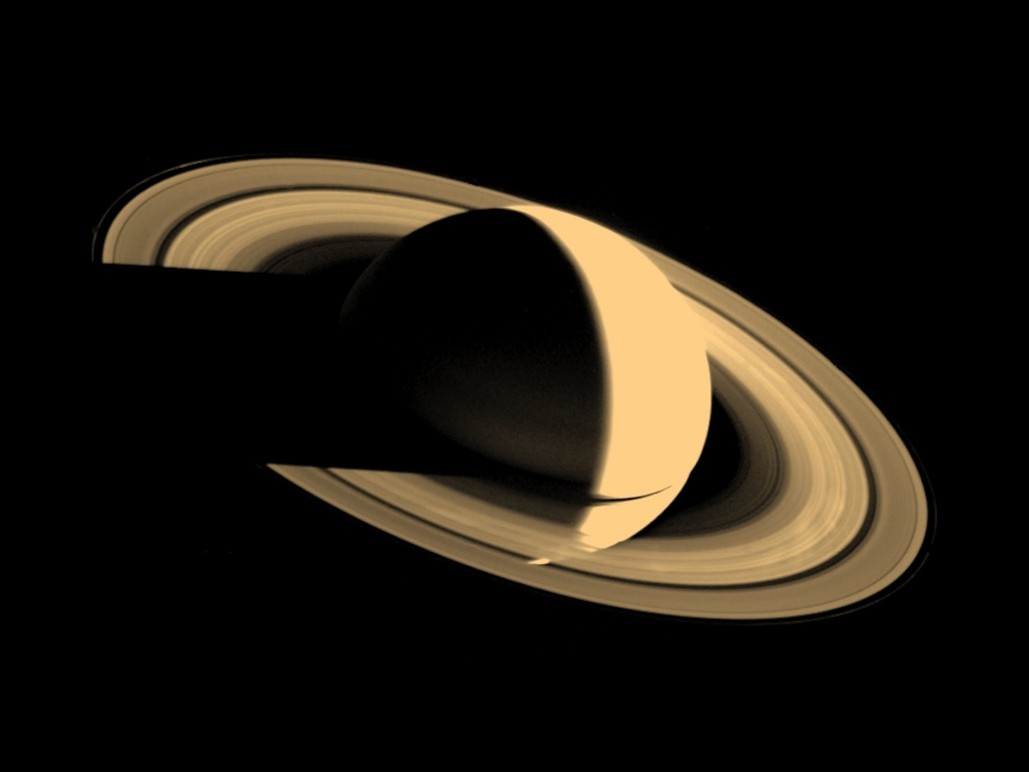
Voyager 1 image of Saturn and its ring taken Nov. 16, 1980, four days after closest approach to Saturn. NASA
Take Voyager 1, the most distant object humanity has ever built. Launched nearly 50 years ago, it has been travelling ever since at extraordinary speed.
Now count to 14.
It just travelled the distance from North Bay to Toronto in that time and has continued to do so for nearly five decades. And yet, in all that time, it has only covered about one light-day. The nearest star beyond the Sun, Proxima Centauri, is more than four light-years away. At this rate, the trip would take around 81,000 years. Voyager 1 is barely 0.06% of the way there. [4]

Galaxy cluster MACS J1149.5+2223, 5 billion lightyears away.
Then there is the view offered by the James Webb Space Telescope (below): a sliver of sky so small it would be easily overlooked yet teeming with galaxies. Each faint dot contains, on average, hundreds of billions of stars. The mind strains to reconcile such abundance with the glacial pace of interstellar travel. The distances involved are not just large; they are almost beyond intuition. [5]
And yet, back on Earth, institutions like the Canadian Space Agency (CSA) and NASA are often criticized for their cost. Their budgets, roughly $1bn and $24bn, respectively, sound substantial until set against national expenditures. For Canadians, the CSA accounts for about 0.3 cents of every tax dollar: less an extravagance than a rounding error. [6,7]
The complaint that such agencies “fail to provide a return” misses the point. They aren’t meant to. Like any serious long-term investment, their payoffs are diffuse, delayed and often captured by others. The purpose is to push outward into knowledge, capability and possibility long before markets can follow.
The returns, though indirect, are far from trivial. Data from the ISS (International Space Station) has generated hundreds of scientific papers and dozens of patents, seeding further innovation well beyond astronomy. [8] Canada’s space sector, for its part, contributed roughly $3.2bn to our economy in 2022 and employs some 25,000 people. [9] That’s a 300% return on investment! Find me another government agency with those numbers.

Some of the companies funding experiments on the ISS between 2001 and 2022. The x-axis shows the number of experiments. [8]
More tangible still are the terrestrial dividends. Medical imaging techniques such as CT and MRI scans owe much to efforts to sharpen space imagery. [10] Real-time patient monitoring systems used in ICUs trace their lineage to astronaut health tracking. [11] Microgravity research has improved drug development, particularly in complex protein structures relevant to cancer and Alzheimer’s disease. [12] Studies of bone density loss in orbit have accelerated treatments for osteoporosis. [13] Even water purification systems designed for spacecrafts now serve in disaster zones. [14]
Navigation, too, has been transformed. Satellite-based positioning underpins logistics networks for firms from Amazon to Walmart, quietly enabling the choreography of global trade. [15]
Perhaps the clearest sign of space’s economic maturation is the rise of private enterprise. SpaceX, building on decades of publicly funded research, has slashed the cost of reaching orbit and opened the door to a new generation of startups. Its lofty valuation ($2tr) hints at the scale of anticipated returns. Alongside it, firms like Blue Origin are exploring everything from advanced telecommunications to the more speculative prospect of off-world infrastructure. [16] Even data centres, famously energy hungry, may one day migrate skyward, drawing on the Sun’s uninterrupted power. [17]

Rise of SpaceX’s valuation in 2024. [18]
For all the talk of cost, then, the logic is straightforward. Space agencies absorb early losses so that others may later harvest gains. They fund what markets will not yet touch, creating a reservoir of knowledge that is, in essence, a public good.

A sliver of the edge of Earth is brightly illuminated against the vast darkness of space. Credit: NASA
In an era inclined toward short-termism, that may be their most radical feature. They remind us that progress often requires patience, that collaboration can transcend borders, and that the returns worth having are sometimes the ones furthest away. On a small blue planet, hurtling through an indifferent cosmos, that seems a wager worth making.
SHIV
- [1] https://www.nasa.gov/gallery/lunar-flyby/
- [2] https://www.space.com/15830-light-speed.html
- [3] https://www.sciencefocus.com/space/what-is-the-speed-of-gravity
- [4] https://science.nasa.gov/mission/voyager/voyager-1/
- [5] https://esawebb.org/images/potm2601a/
- [6] https://www.asc-csa.gc.ca/eng/publications/dp-2025-2026-at-a-glance.asp
- [7] https://www.planetary.org/space-policy/nasa-budget
- [8] https://www.nature.com/articles/s41526-025-00485-w
- [9] https://www.canada.ca/en/space-agency/news/2024/09/a-thriving-canadian-space-sector-32b-towards-canadas-gdp-for-2022.html
- [10] https://www.uschamber.com/co/good-company/growth-studio/8-technologies-we-can-thank-nasa-for
- [11] https://www.ncbi.nlm.nih.gov/books/NBK599967/#:~:text=What%20Is%20the%20Technology?,skin%20temperature
- [12] https://osdr.nasa.gov/bio/repo/data/experiments/OS-862
- [13] https://www.asc-csa.gc.ca/eng/sciences/tbone.asp
- [14] https://www.esa.int/Science_Exploration/Human_and_Robotic_Exploration/International_Space_Station_Benefits_for_Humanity/Advanced_NASA_Technology_Supports_Water_Purification_Efforts_Worldwide
- [15] https://www.nasa.gov/directorates/somd/space-communications-navigation-program/gps/#:~:text=Standards%20and%20Specifications.-,NASA’s%20Use%20of%20GPS,space%20operation%20and%20science%20applications.
- [16] https://www.economist.com/business/2026/04/29/spacex-openai-and-anthropic-are-already-public-companies
- [17] https://www.wsj.com/tech/spacex-wants-to-blast-data-centers-into-orbit-heres-what-it-may-take-adf6140a
- [18] https://www.economist.com/briefing/2024/10/17/the-rockets-are-nifty-but-it-is-satellites-that-make-spacex-valuable

