
This Time It Is Different
No it isn’t…but that doesn’t make things any easier!
The reason these times are so challenging is simple: talking and thinking about money doesn’t involve math, it involves feelings. When the market is performing well, we don’t “feel” a 10% return, instead we feel secure, proud, perhaps even greedy. When the market drops, we feel anxious, insecure, perhaps even fearful.
One of our most important jobs is to help clients recognize their natural emotional reactions and simply try to add some context. I am hoping that this communication helps on that front.
Let’s start with some charts to illustrate what has transpired in the markets this year. For the purposes of this communication, the “markets” means the S&P500:

The slide show a drastic decline of 18% in less than two months (from the peak to the trough) giving us a 13.5% decline on the calendar year. Shockingly quick, but in terms of a mid-year pullback, it wasn’t unusual at all:

The slide gives us two very important insights: it shows us that every year has a pullback of some sort (illustrated by the blue dots); and that the average annual pullback is 12.9%. It is important to note that as of today, the market has recovered to a point where it is down about 8% for the calendar year.
The frustrating part with this market correction is that it is entirely man-made: the market is reacting to economic uncertainty arising from an active policy decision. This would be classified as an “event” driven correction. As we know, the world is unpredictable, and events regularly cause market challenges:

The obvious takeaway is that despite these annual challenges, the equity markets continue to be the best way to ensure a long-term return which exceeds the after tax and after fee rate of inflation. Put simply, it is the best way to ensure that one doesn’t run out of money.
The challenge with market corrections is that every one of us comes face to face with our own behavioural bias’…our feelings. Unfortunately, this can lead to mistakes regardless of whether you are invested in a growth, balanced or conservative portfolio:

Our belief is that we need to focus (or “re-focus”) on the timeline. If a portfolio is positioned for long-term growth, then short term swings are not an issue and allowing the portfolio managers to actively navigate the volatility is the best approach. However, if the volatility is causing you anxiety, then we are happy to review your portfolio construction and look at the impact of making a change.
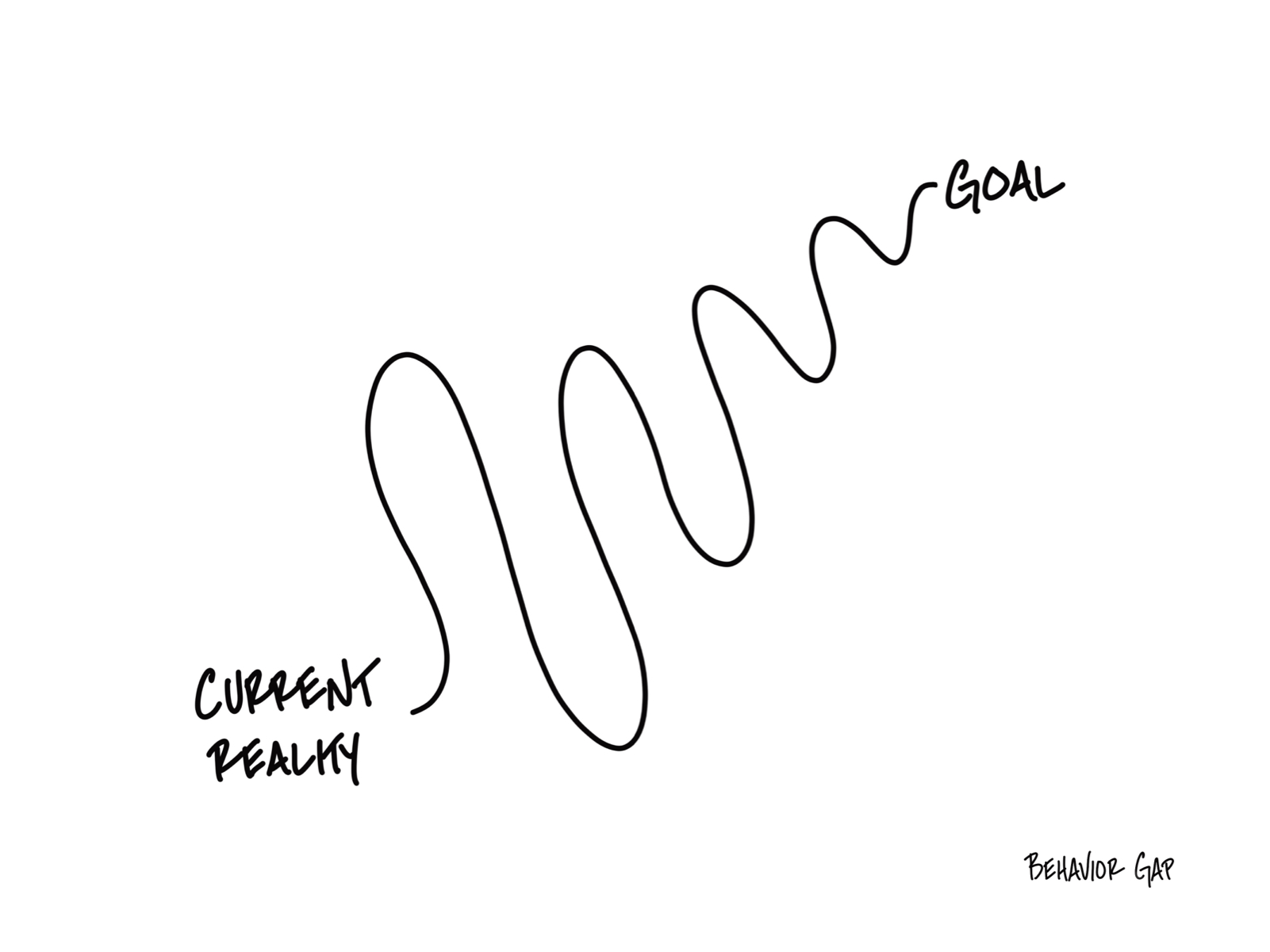
In conclusion, we hope that you can take comfort with this sketch from our long-time friend, Carl Richards:

Take care,
Chris

