
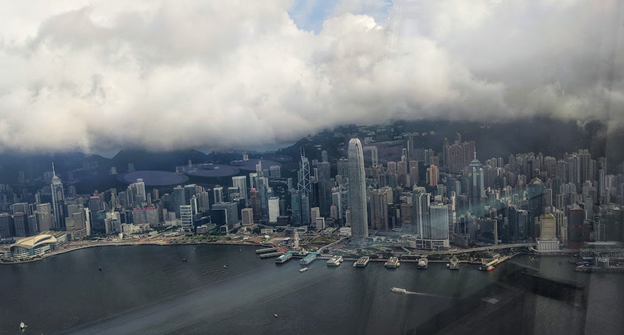
We live in remarkable times. I was born just before the collapse of the USSR, so my entire life has unfolded under a world order shaped by Western rules and influence. But the balance is shifting. China, now the world’s second largest economy, is growing at an extraordinary pace and leaving its mark on everything from the products we buy to the headlines we read.
Unlike the Cold War era, when the USSR and the West operated in near-complete isolation, our relationship with China is deeply intertwined and our economies depend on each other in countless ways. For perspective, China currently holds roughly $750 billion in U.S. debt.

Against this backdrop, I found myself wandering through China earlier this summer. Towering skylines, buzzing markets, and an undercurrent of ambition made those headlines feel far less abstract. I noticed things I’d only read about before and a few surprises I didn’t expect. The U.S.–China trade picture might change every other week, but one thing feels certain: China has stepped onto the world stage as a serious economic heavyweight.
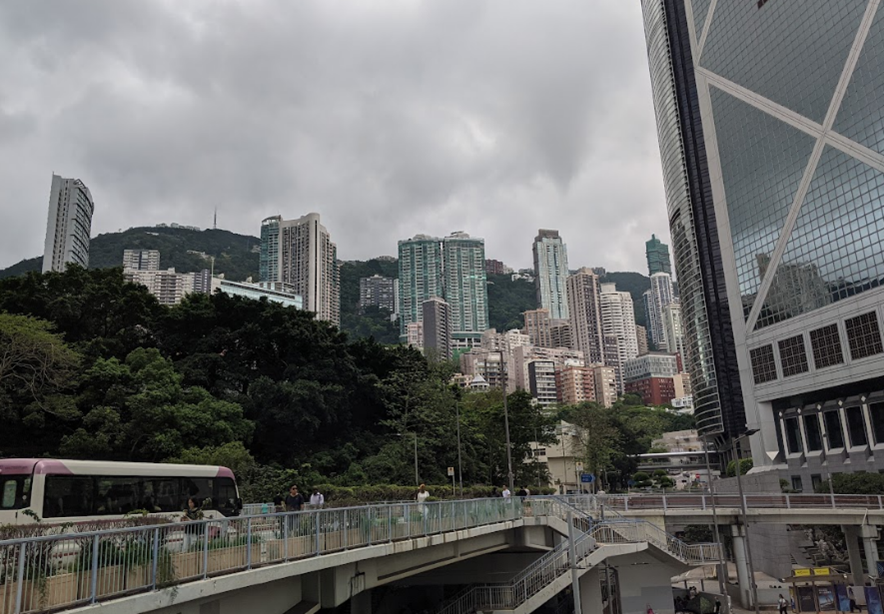
One of the first things that struck me after clearing immigration was how different the ecosystem felt. I’m not talking about culture, food, or people. I mean the everyday tools and systems I usually take for granted when traveling. Normally, there are a few constants I can rely on no matter where I am in the world. But within minutes of landing, those assumptions were gone.
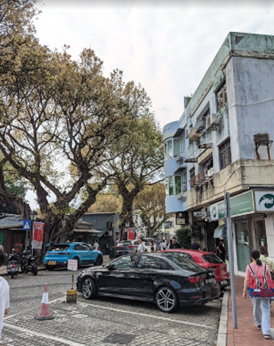
The first challenge hit as soon as I jumped into a cab. My Google Translate app was struggling, so I asked the driver if I could type my destination into her phone. She handed it over, but it wasn’t running Android or iOS. Instead, it was an unfamiliar interface called HarmonyOS, a homegrown operating system built and used entirely in China. Her maps app was also in Chinese characters. Somehow, we navigated our way to my stop, but not before one last surprise: she accepted credit cards, just not any I’d ever heard of. China has its own payment networks, separate from Visa or Mastercard, and even my U.S. cash was politely declined in favor of Renminbi.
It was my first real glimpse of a parallel digital and financial world. One that runs independently of the systems most of us assume are universal.
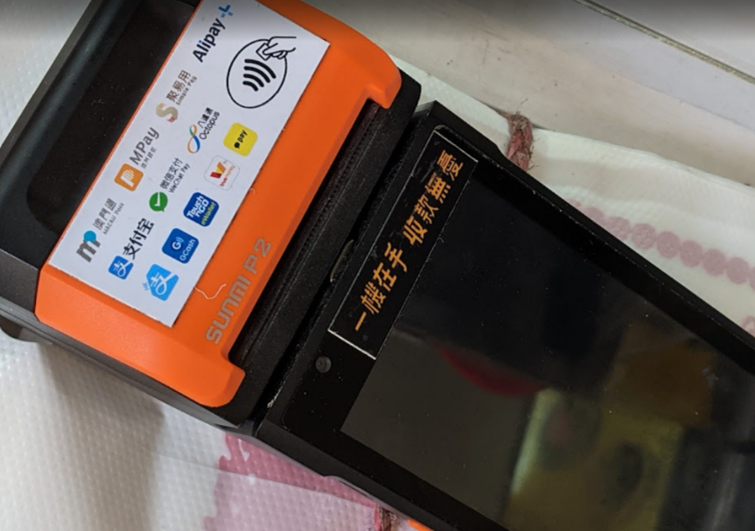
Visa, Mastercard and Amex not accepted here.
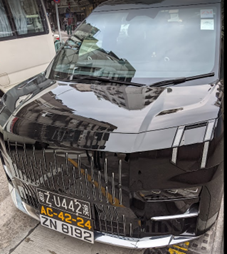
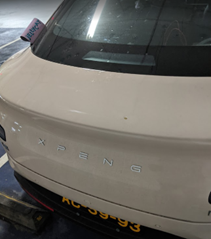
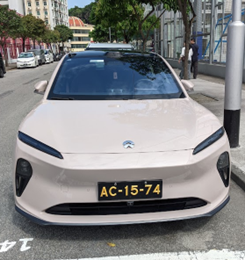
Everywhere I looked, I was surrounded by devices, gadgets, and cars from brands I’d never even heard of. China’s domestic auto industry isn’t just cranking out the budget models many people in the West still associate with the country. It’s producing top-tier luxury vehicles that can hold their own against the most established global names. Take the Zeekr 009 (pictured below), for example: a sleek, high-end van that starts at around $70k USD in the Chinese market. You can see more of the Zeekr HERE.
Then there’s BYD, a homegrown electric vehicle powerhouse that has quietly become the largest seller of EVs in the world. And CATL, another Chinese giant, now leads the globe in EV battery production, supplying everyone from Tesla to Volkswagen. These aren’t fringe players, they’re shaping the future of entire industries, often without much recognition outside Asia.

“Designed by Apple in California, assembled in China.” – the back of your iPhone
It’s not just electric vehicles where China is making its mark. For years, the country’s role was seen largely as manufacturing Western intellectual property, with little global appetite for homegrown innovation.
That’s no longer the case. Today, products conceived and designed in China are making a worldwide impact. Companies like Shein, Temu, TikTok, and Pop Mart have the world consuming Chinese IP directly.
In doing so, they’re expanding China’s soft power and going head-to-head with American giants.
It’s a quiet but profound shift: China is no longer just the factory of the world. It’s becoming one of its trendsetters.
Shein has gone toe-to-toe with fast fashion heavyweights like H&M and Zara, armed with a secret weapon: artificial intelligence. By tracking consumer preferences in real time, the company can transform a runway look into an affordable closet staple at lightning speed. It’s now preparing for a public listing in London and its valuation has surpassed its Western rivals. ,
Pop Mart, meanwhile, has quietly planted its flag in the U.S., with 37 stores and a cult following for its collectible toys. Its stock has soared 200% since the start of the year!
 Together, these brands show that Chinese companies aren’t just catching up to the West in certain sectors, they’re rewriting the playbook.
Mixue, a Chinese fast-food chain known for its budget-friendly ice cream and tea drinks, now boasts more outlets worldwide than McDonald’s. Its rapid expansion is sweeping across Asia, Australia, and South America (the ice cream’s pretty good, too!).
China’s innovation drive extends well beyond consumer products. The country is building momentum in drug development, while closing the gap with the U.S. in nuclear energy, robotics, and artificial intelligence. One standout example is DeepSeek, which rattled markets earlier this year. Born from necessity, DeepSeek showcases China’s ability to innovate under constraints: restricted from accessing the most advanced chips, its engineers trained the model to round certain calculations, boosting efficiency. The trade-off is reduced accuracy in demanding tasks like protein modeling. ,
Of course, it’s not all rosy in the land of the dragon. China faces serious headwinds: an aging population, mounting debt, a real estate crisis, and high youth unemployment. Layer on severe restrictions on personal and political freedoms, and it’s clear the country still has a way to go before it can match the West in certain areas. But the gap is narrowing… and quickly. ,
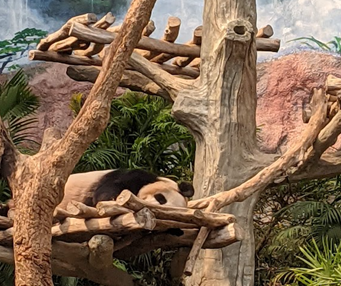
All I wanted was to see the Pandas. All they wanted to do was sleep.
I found myself thinking about that future one afternoon in the back of a taxi, as CCP propaganda played on the small screen in front of me, punctuated by cheerful McDonald’s ads. It was a strangely fitting snapshot of a nation straddling two worlds: one rooted in its own vision, the other intertwined with the global stage.
For those of you that are interested in the new China, I would suggest watching season 3, episode 6 of The Grand Tour on Amazon Prime.
I hope all of you had a great summer as we head into autumn.
- SHIV
[1] https://www.statista.com/statistics/246420/major-foreign-holders-of-us-treasury-debt/ [2] https://www.reuters.com/business/autos-transportation/electric-vehicle-sales-growth-eases-21-july-research-firm-says-2025-08-12/ [3] https://www.bloomberg.com/professional/insights/markets/worlds-top-battery-maker-catl-reveals-the-future-of-evs/ [4] https://www.harpersbazaar.com/fashion/a62324714/shein-on-demand-model/ [5] https://www.wired.com/story/shein-is-officially-the-biggest-polluter-in-fast-fashion-ai-is-making-things-worse/ [6] https://www.economist.com/business/2025/06/23/its-not-just-labubu-dolls-chinese-brands-are-booming [7] https://www.economist.com/leaders/2025/06/26/chinese-brands-are-sweeping-the-world-good [8] https://www.nature.com/articles/d41573-025-00102-1 [9] https://gpt.gekko.de/deepseek-nvidia-nccl-efficiency/ [10] https://www.economist.com/china/2025/08/05/six-months-after-deepseeks-breakthrough-china-speeds-on-with-ai [11] https://www.economist.com/china/2024/01/02/xi-jinping-and-china-face-another-tough-year [12] https://www.cnbcafrica.com/2024/china-faces-economic-headwinds-as-it-grapples-with-an-aging-and-shrinking-population/

